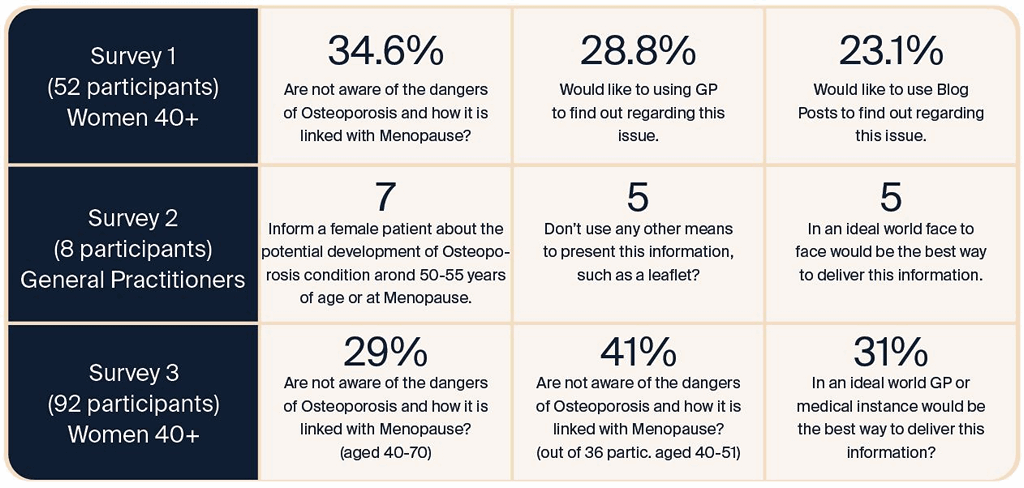
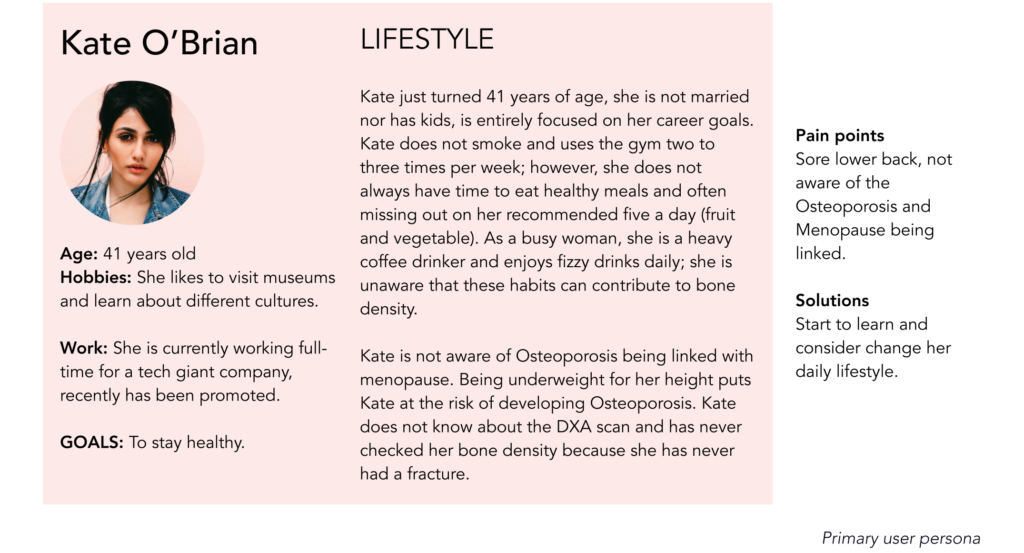
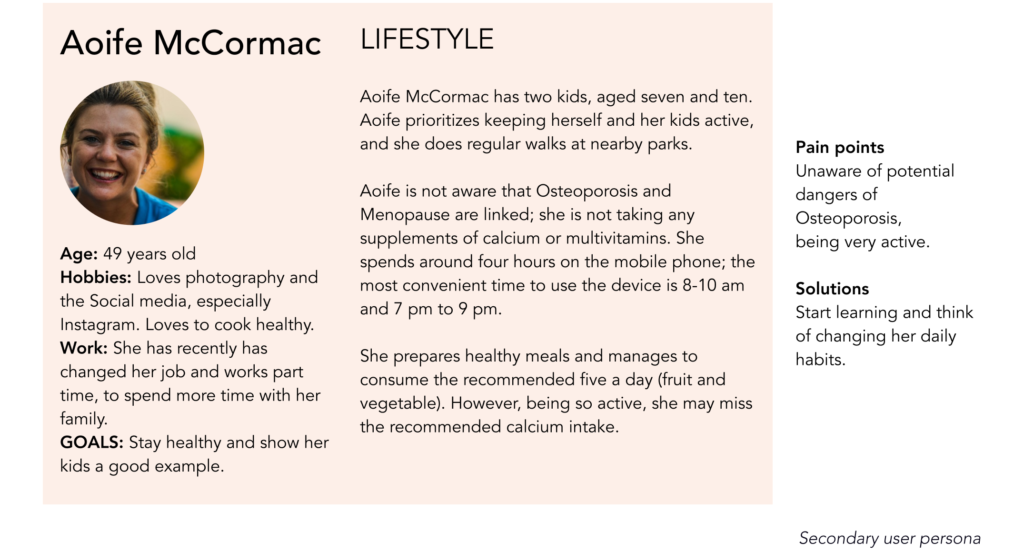
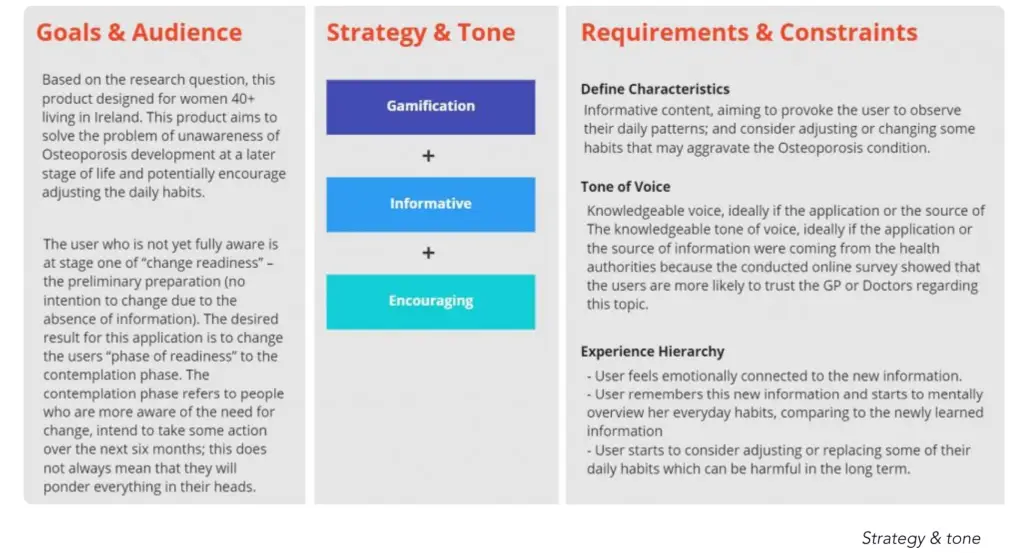
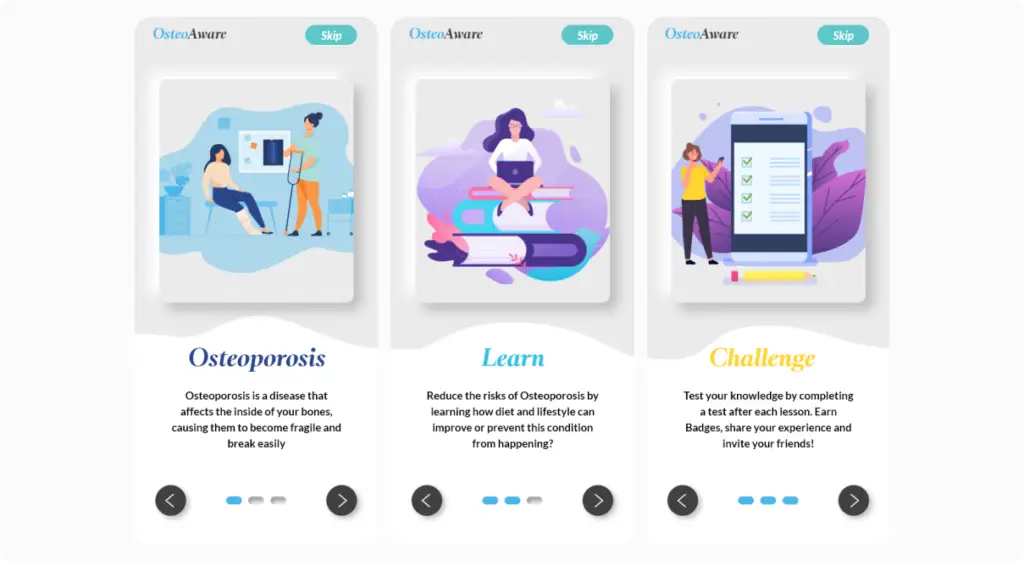
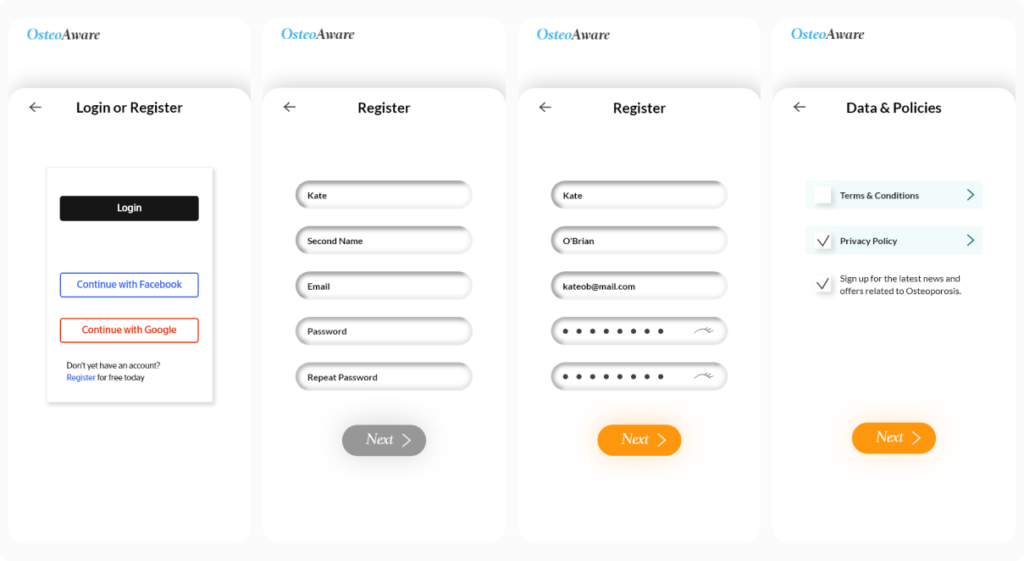
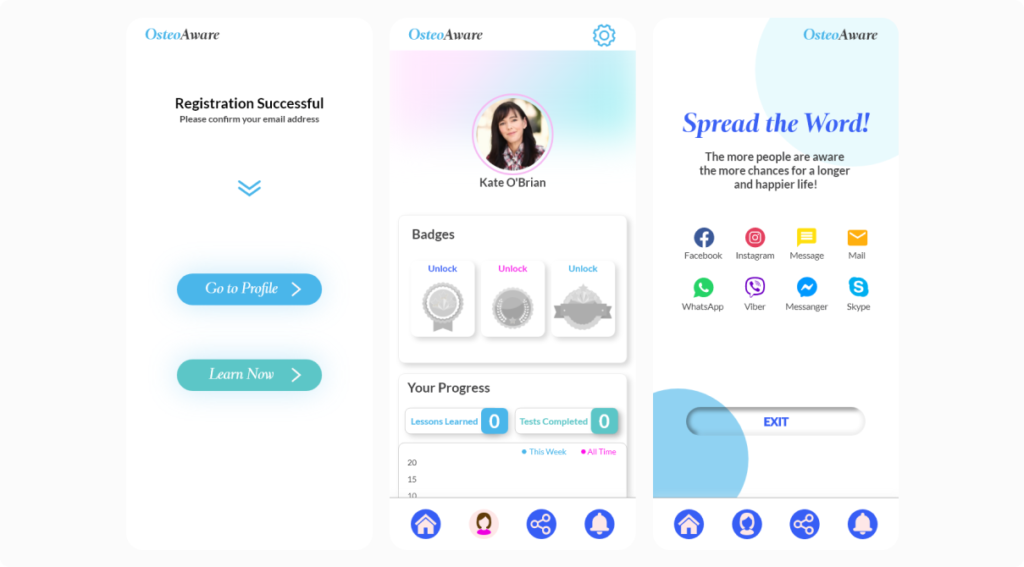
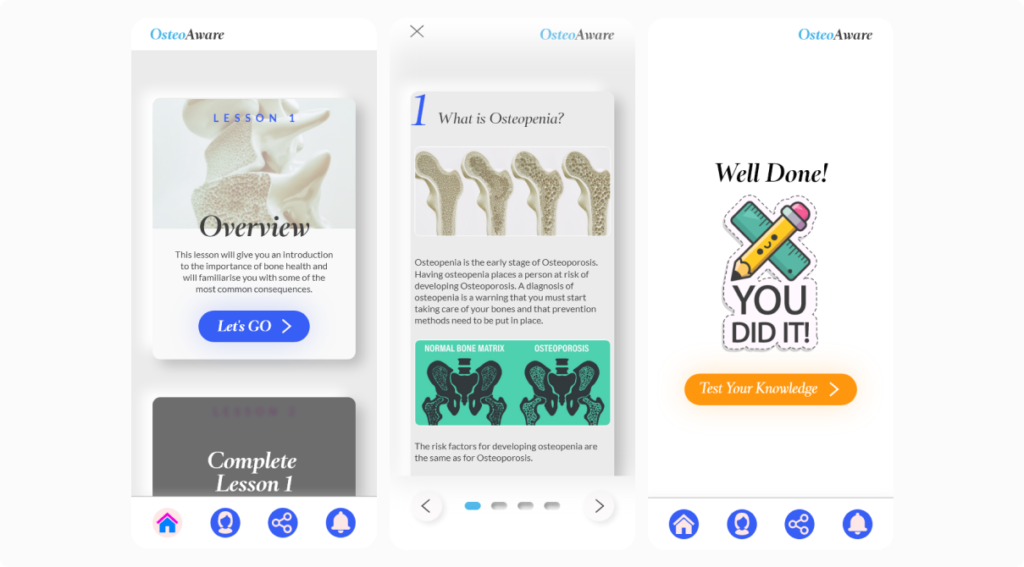
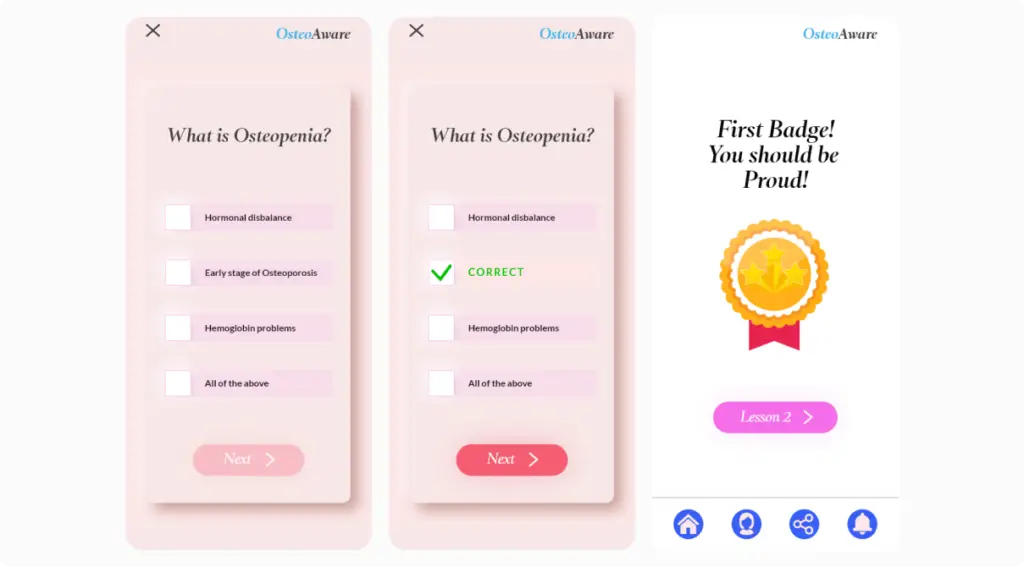
I conducted mixed-method research, including three distinct surveys targeting women 40+ in Ireland. This helped define two primary personas who represent the “readiness” spectrum:
- Kate (The Unaware High-Flyer): Working full-time, active, but unaware that daily habits and the lack of a DXA scan are silent risks.
- Aoife (The Active Learner): Aware of health but misses the link between menopause and calcium intake. She prefers learning via mobile during her part-time schedule.
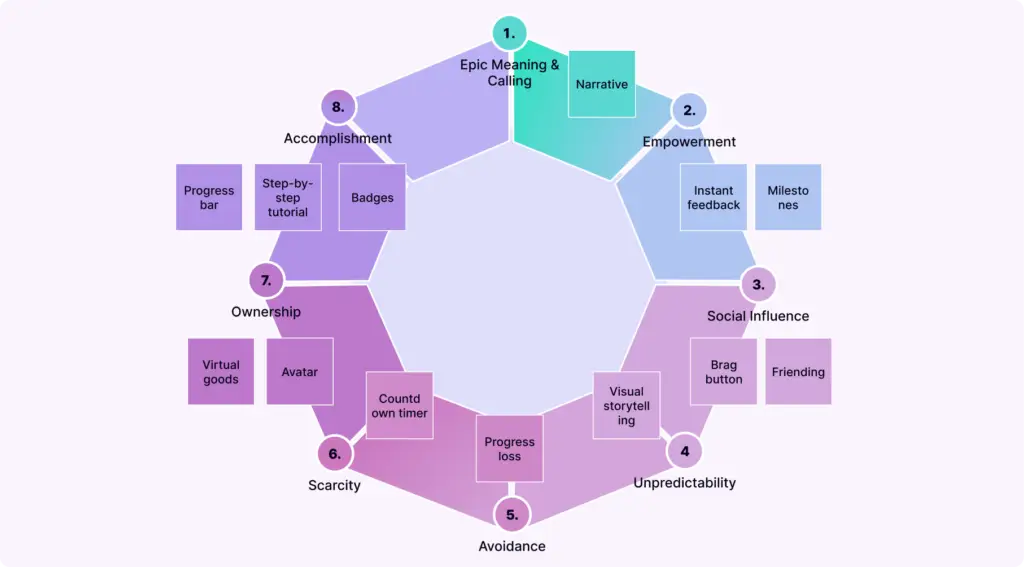
Strategy: The Octalysis Framework
To solve the “motivation gap,” I implemented Human-Focused Design using the Octalysis framework. I focused on a hybrid motivation model:
- Extrinsic (Black Hat): Using Accomplishment and Ownership (badges and medals) to provide immediate feedback and rewards for completing lessons.
- Intrinsic (White Hat): Using Empowerment and Meaning to foster long-term habit changes and a sense of self-efficacy.
Design Philosophy: Accessible Neumorphism
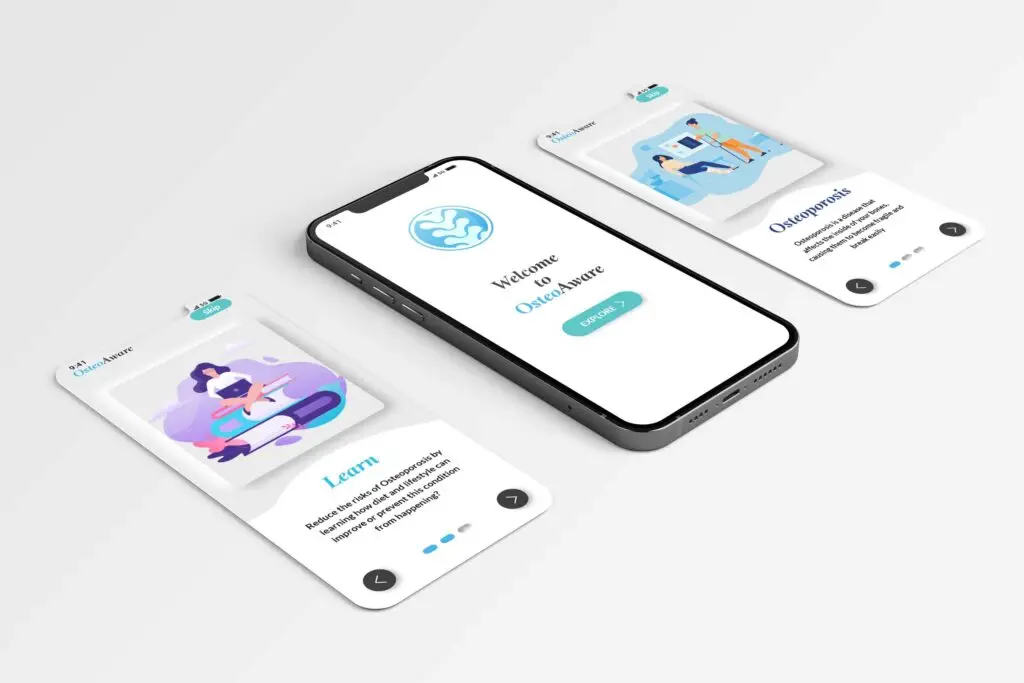
I chose a Neumorphic style to create a soft, modern, and “medical-but-approachable” aesthetic.
- Trust through Simplicity: Clean backgrounds and soft shadows reduce the “clinical” feel of health data.
- Accessibility First: To counter the common usability issues of Neumorphism, I utilized high-contrast call-to-action buttons and bold typography to ensure the interface remained accessible for the 40+ demographic.
Validation: The Three-Prototype Test
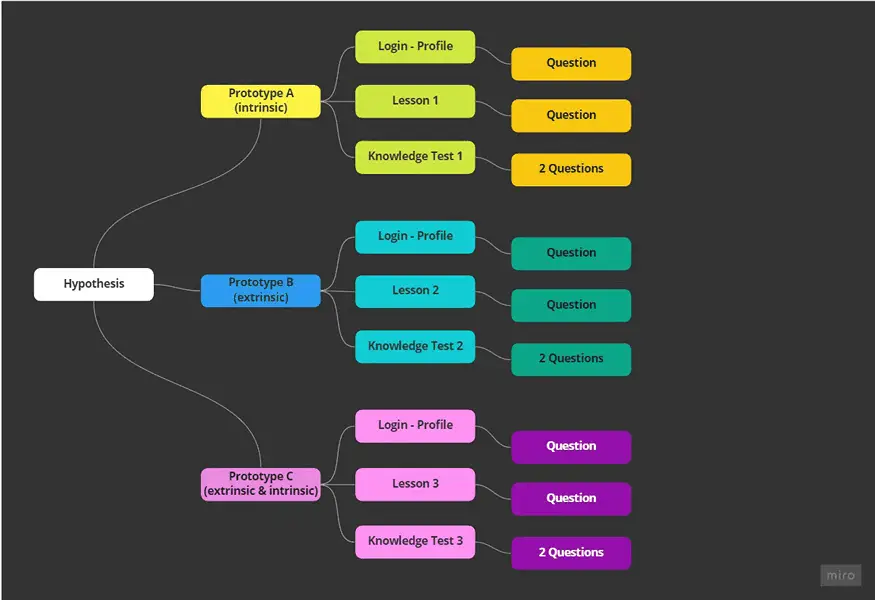
I used Maze.co to run remote usability testing on three distinct versions of the app to prove my hypothesis:
- Prototype A: Intrinsic motivation only.
- Prototype B: Extrinsic motivation only.
- Prototype C (The Winner): A hybrid of both.
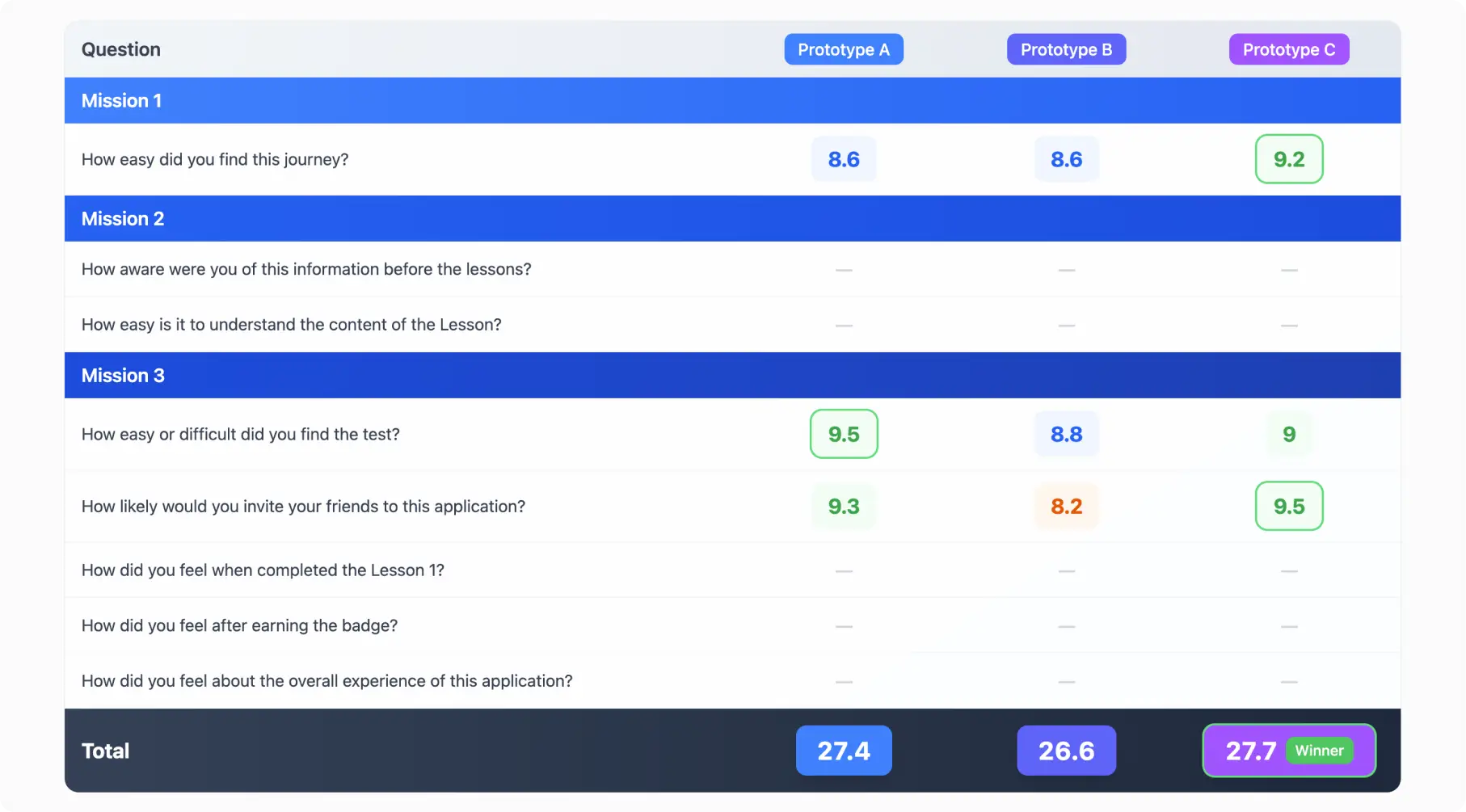
The Results:
- User Preference: 80% of users chose Prototype C, stating it felt “more complete” and “easier to follow.”
- Behavioral Impact: Users reported a 9.8/10 inclination to change their bone-health habits after using the application.
Iteration: Refining the Friction
Testing revealed key pain points that led to critical UI refinements:
- Navigation Confusion: Users struggled to find current lessons. Solution: I implemented a “Home Screen First” logic that surfaces the current lesson immediately after login.
- The “Exit” Trigger: A bright blue exit button caused accidental task termination. Solution: I moved the exit function to a top-level settings menu and used a neutral grey “low-priority” color.